
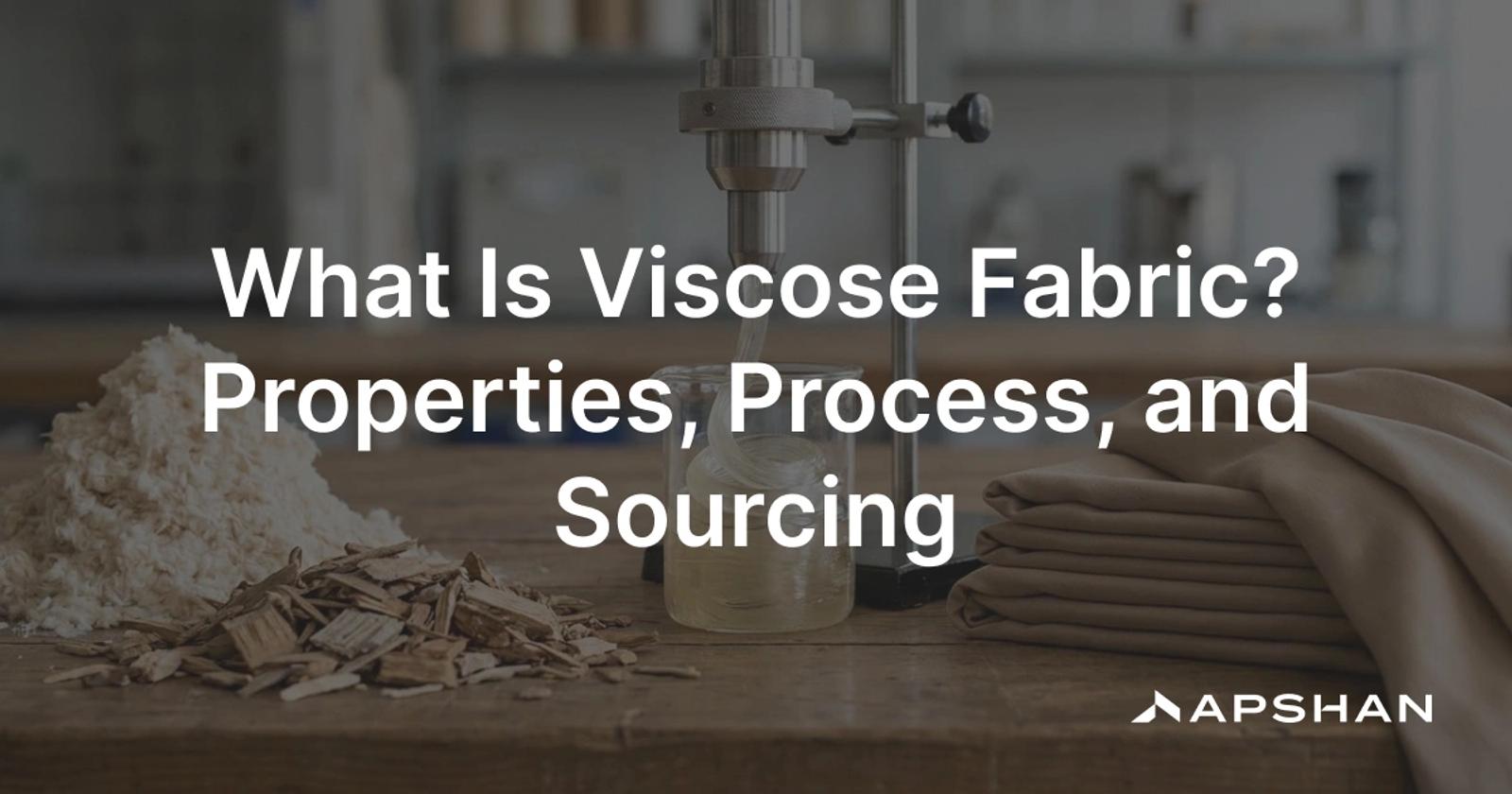
What is viscose fabric?
Viscose is a semi-synthetic fibre made from regenerated cellulose, usually wood pulp. It is the same thing as rayon: rayon is the umbrella name for regenerated-cellulose fibres, and viscose is the specific, oldest way of making them. The name comes from the thick, honey-like liquid the cellulose becomes partway through production.
That makes viscose a middle child. It is not natural in the way cotton or wool is, because the raw cellulose is broken down and chemically re-formed. It is not synthetic in the way polyester is, because it starts from a plant, not from oil. The industry calls this family man-made cellulosic fibres, and viscose is by far the biggest member.
You will find viscose in dresses, blouses, linings, loungewear, and countless blends (viscose with elastane, polyester, or nylon). It is prized for a soft, fluid drape that reads like silk at a fraction of the price, which is why it sits next to recycled polyester and organic cotton as one of the fibres a brand chooses between when specifying a fabric.
How viscose is made
Viscose dates to the late nineteenth century, when it was developed as an affordable substitute for silk, and it was long sold as artificial silk. More than a century later the basic chemistry is unchanged, which is both why viscose is cheap and mature, and why its environmental issues are so well known. Understanding the process explains both the fibre's feel and its bad environmental name. It runs in a set sequence.
- Dissolving pulp: wood, usually beech, eucalyptus, pine, or bamboo, is chipped and purified into dissolving pulp, a highly cleaned cellulose made for chemical conversion rather than paper.
- Steeping in caustic soda: the pulp is soaked in sodium hydroxide to form alkali cellulose, which primes it to react in the next step.
- Carbon disulfide: the alkali cellulose is treated with carbon disulfide to form cellulose xanthate, then dissolved to make the viscous, honey-like viscose solution the fibre is named after.
- Spinning and regeneration: the solution is forced through a spinneret into an acid bath, which turns it back, or regenerates it, into solid cellulose filaments that are washed, cut, and spun into yarn.
Two things follow from this. The soft hand and high dye uptake come from the pure, re-formed cellulose. The pollution problem comes from the carbon disulfide, a hazardous chemical linked to worker-health harm and water pollution when it is not captured and recovered.
Viscose properties: the good and the bad
Viscose behaves like a cheaper, less demanding silk. Its strengths and weaknesses come as a pair, and both matter when it is specced into a garment.
- Soft and fluid: viscose has an excellent drape and a smooth, cool hand, which is why it suits blouses, wide-leg trousers, and soft bias-cut pieces that need to move and fall well.
- Breathable and absorbent: the cellulose absorbs moisture well and lets air through, so viscose breathes more like cotton than like polyester and feels cool against the skin in warm weather.
- Takes colour brilliantly: viscose dyes deeply and evenly, giving rich shades, though the trade-off can be colour bleeding, so it needs sound dye selection and testing.
- Weak when wet: this is the key weakness. Viscose loses much of its strength when wet, so it can stretch, distort, or tear in the wash and is prone to shrinking.
- Creases and needs care: it wrinkles easily and often calls for gentle or dry cleaning, which is why the care label matters so much on viscose garments, and why a wrong care instruction turns quickly into returns.
Those last two points make viscose a fabric where the care label and a shrinkage and colourfastness check earn their place, because the fibre's wet behaviour is where returns come from.
What viscose is used for
Viscose covers most of the ground cotton does, but leans dressier and more fluid, so it is a workhorse for soft, draping garments rather than structured ones. It shows up across apparel and home textiles, and its low cost keeps it common at every price point from fast fashion to premium linings.
- Womenswear and dresses: wrap dresses, blouses, skirts, and relaxed trousers, wherever a soft drape is the point.
- Linings: jacket and coat linings, where its smoothness and breathability help a garment slip on and wear comfortably.
- Loungewear and jersey: knitted viscose tees and loungewear, often blended with elastane for stretch and recovery.
- Blends: viscose is a common blending partner, added to cotton, polyester, or wool to lend softness, drape, and sheen.
Viscose vs modal, lyocell, cotton, and polyester
Viscose is easiest to understand next to its neighbours. Modal and lyocell come from the same cellulose family but use different chemistry, while cotton and polyester sit on either side of it.
- Viscose vs modal: modal is a stronger, more refined viscose, made by a high-wet-modulus process that holds up far better when wet. It is softer and more durable, and shrinks less, which is why it is common in underwear and premium tees.
- Viscose vs lyocell: lyocell (often branded Tencel) uses a closed-loop process with a non-toxic solvent that is recovered and reused, so it is the cleanest of the three and the strongest when wet. It usually costs more.
- Viscose vs cotton: both breathe and absorb, but cotton is a true natural fibre, stronger when wet, and easier to launder; viscose drapes better and feels more luxurious.
- Viscose vs polyester: polyester is a synthetic from oil, stronger and quick-drying but less breathable; viscose feels and breathes better but is weaker and less durable.
For a brand, the practical read is simple: viscose for drape and cost, modal for a tougher and softer version, lyocell for the lowest-impact option in the family. The three are often blended with each other or with cotton and elastane, so a fabric is rarely one fibre in isolation, and the composition on the label is what decides how it wears and washes.
Is viscose sustainable? The carbon-disulfide problem
Viscose has two environmental pressure points, and both sit upstream of the garment. Neither is a reason to avoid the fibre outright, but both are reasons to source it carefully.
- The forests: viscose starts as trees, and a share of the pulp still comes from ancient or endangered forests when the supply chain is not verified.
- The chemistry: conventional viscose uses carbon disulfide and other chemicals that harm workers and waterways when a mill does not capture and recover them. Cleaner mills run closed-loop chemical recovery.
- The bamboo trap: fabric sold as bamboo is almost always bamboo viscose, made by the same chemical process from bamboo pulp. It is a viscose, not a natural bamboo fibre, and marketing it as purely natural or eco is a common greenwashing claim to avoid on a label.
Scale is why this matters. Viscose is the single most-produced man-made cellulosic, around 80 percent of the category, so its sourcing decisions move a lot of forest. Textile Exchange reports that about two-thirds of these fibres now come from certified or controlled feedstock, which still leaves a large share unverified, exactly the gap a brand's sourcing choices either widen or close.
This is where a fibre choice becomes a sustainable sourcing decision. Certified forestry (FSC or PEFC), mill assessments such as Canopy's Hot Button ranking, and lower-impact branded viscose such as Lenzing EcoVero are the levers a brand pulls, and any green claim made from them has to hold up under the green claims directive. Recycled-input viscose, spun from cotton waste rather than virgin trees, is the newer route worth watching.
How brands source and spec viscose well
On a tech pack, viscose is a fabric with known weak points, so a good spec plans around them rather than discovering them in bulk.
- Verify the pulp: ask for certified forestry and a mill that recovers its chemicals, and get it in writing through the supplier, so the sustainability claim on the hangtag is documented and real, not assumed from a fibre name.
- Test the wet behaviour: specify shrinkage and colourfastness tests, because viscose's weak-when-wet nature is exactly what fails after the first wash, and set a pass grade so the mill and a third-party lab are held to the same bar.
- Set the care label: write the wash and care instructions to match how the fabric actually behaves, and reproduce them consistently across textile manufacturing for the whole order.
None of this makes viscose a fabric to avoid. It makes it a fabric to specify with eyes open: a beautiful, affordable drape whose weaknesses (wet strength, shrinkage, and an upstream footprint) are all known in advance and all manageable with the right pulp, the right mill, and the right tests. Treated that way, viscose earns its place in a range rather than turning into a returns problem after the first season.
Knowing which cellulosic fibre, mill, and certification fit a given garment is the fashion-native detail Apshan's Nari knowledge graph answers, cited to source, inside the AI assistant your team already uses. Request access.