
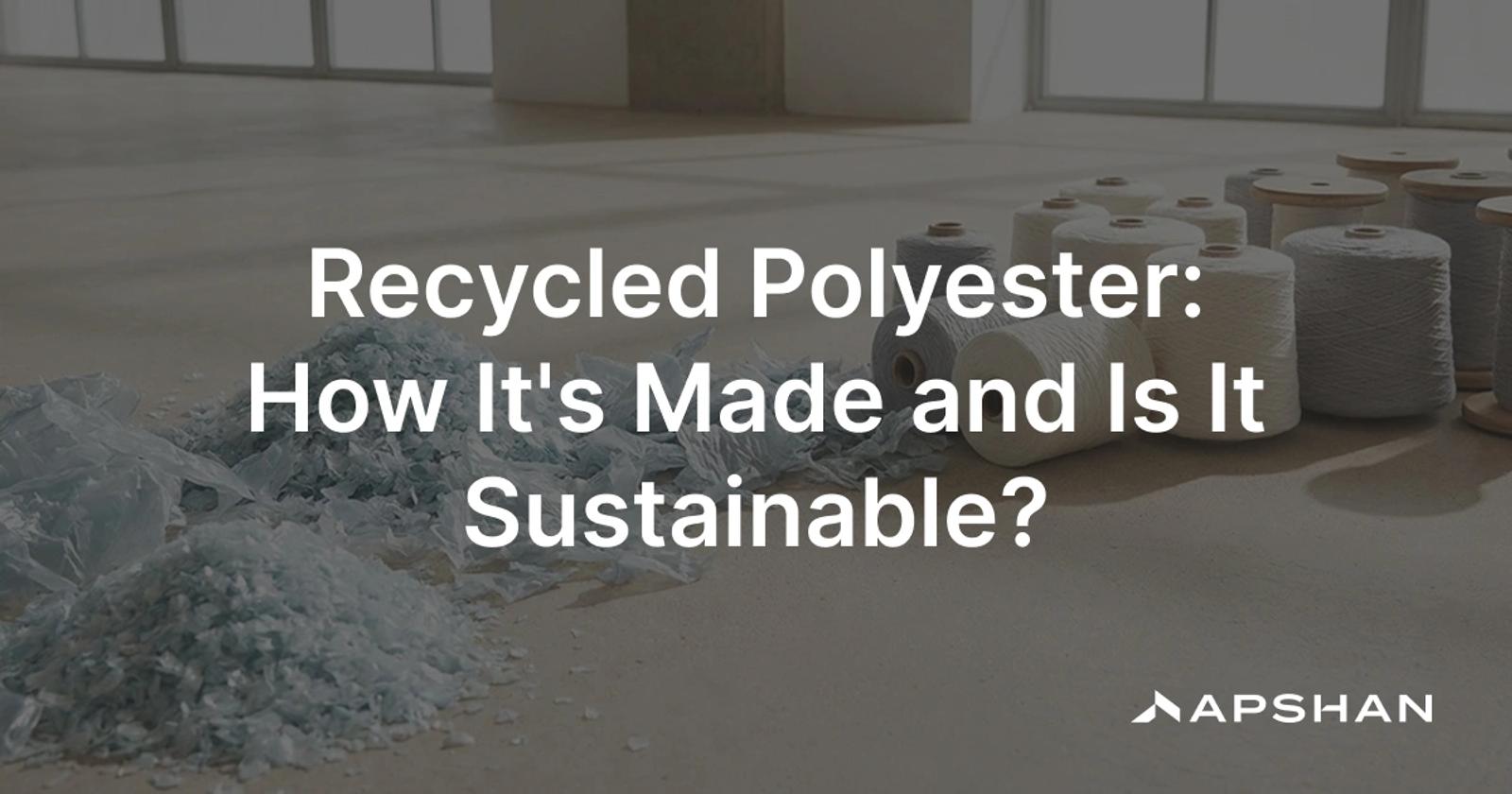
The word recycled is on hang-tags across activewear, swimwear and outerwear, usually attached to polyester. It reads as a clean choice, and often it is a better one. But recycled polyester is a specific material with a specific footprint, and the label hides most of what matters.
This guide covers what recycled polyester actually is, how it is made, whether it is more sustainable than virgin polyester, and how to read a claim, all as part of the wider shift toward circular fashion.
What is recycled polyester (rPET)?
Recycled polyester, or rPET, is polyester made from plastic that already exists rather than from newly extracted petroleum. Chemically it is the same PET as virgin polyester; the difference is the feedstock, and almost all of that feedstock is used drink bottles, not old clothes.
That surprises most people. An estimated 98 to 99% of recycled polyester comes from PET bottles, because bottle plastic is clean, sorted and easy to process, whereas discarded garments are mixed fibres, dyed and blended. Less than 0.1% of polyester is recycled from textile into new textile, which is why the way virgin fibre is made still sets the baseline for the whole category.
How is recycled polyester made?
There are two routes, and they are not equal. Mechanical recycling is the dominant commercial method; chemical recycling is the higher-quality method still scaling up.
Mechanical recycling turns bottles into fibre in a short physical chain:
- Bottles are collected, sorted by colour and washed.
- They are shredded into small flakes.
- The flakes are melted and filtered.
- The melt is extruded and spun into filament or staple fibre, then knitted or woven.
- Mechanical recycling: cheaper, lower energy and widely used, but each cycle shortens the polymer chains, so the fibre gradually loses strength and quality.
- Chemical recycling: breaks PET back down to its building-block monomers and rebuilds it to virgin-grade quality, which unlocks true textile-to-textile recycling, but it is energy-intensive and not yet at scale.
The quality point is not a detail. Peer-reviewed studies show mechanical recycling progressively shortens the polymer chains, a process called chain scission, so the fibre loses strength with each pass and stays suitable for quality apparel only through a limited number of cycles. That is why recycled polyester is usually blended with virgin fibre rather than used at 100%.
Is recycled polyester more sustainable than virgin polyester?
At the fibre stage, yes, and by a clear margin. Making polyester from existing plastic avoids the petrochemical extraction and processing that dominate virgin polyester's footprint, so recycled fibre carries materially lower carbon, energy and water impact.
- Carbon: a peer-reviewed ISO life-cycle assessment found recycled polyester staple fibre had up to 48% lower global warming potential than virgin, depending on the spinning process.
- Energy: the same study measured up to 46% lower primary energy demand for the recycled fibre.
- Water: up to 33% lower water use, since no new raw-material synthesis is required.
- Performance: near-identical strength, elasticity, moisture-wicking and colourfastness, which is exactly why brands can substitute it without changing the product.
The exact saving depends on the process and the boundary drawn. Bottle-to-fibre assessments that stop at the recycling plant can report carbon savings as high as 79%, while a fibre-specific study that includes collection and transport lands nearer 48%. Both point the same way: recycled beats virgin on the numbers that the label is really claiming.
One caveat is worth stating plainly. These figures compare recycled polyester with virgin polyester, not with every alternative fibre. A lower-carbon synthetic is not automatically the lowest-impact option for a given product, and a natural or next-generation material can win on one garment and lose on another. Recycled polyester is the better version of polyester, which is a narrower claim than the better fabric.
Why recycled does not mean sustainable
Here is the part the hang-tag leaves out. Recycled polyester fixes where the plastic comes from. It does not fix that the garment is, and stays, plastic. Four problems survive the recycling step.
- It still sheds microplastics: recycled polyester releases the same plastic microfibres in the wash as virgin polyester. Recycling changes the source, not the shedding.
- It competes with bottle recycling: a PET bottle can be recycled back into a bottle several times, a genuine closed loop. Turning it into fibre usually ends that loop, which is why some sustainability bodies are wary of pulling bottles into textiles at all. It is a tension the circular economy is still working through.
- It is rarely recycled again: because textile-to-textile recycling is barely commercial, most recycled polyester garments still end their life in landfill or incineration, not a second garment.
- It can enable overproduction: a recycled label can make a high-volume, disposable product feel responsible, which is precisely the greenwashing risk that new rules such as the Green Claims Directive are written to curb.
How to verify a recycled polyester claim: GRS vs RCS
Recycled content is easy to claim and hard to see, so two third-party standards exist to verify it, both run by Textile Exchange. Knowing the difference is the fastest way to judge a claim.
- Global Recycled Standard (GRS): the stricter one. It verifies recycled content and adds social, environmental and chemical requirements across the supply chain, with chain-of-custody tracing.
- Recycled Claim Standard (RCS): lighter. It verifies the presence and amount of recycled content only, without the wider social and environmental criteria.
The thresholds matter. A product can carry a business-to-business GRS or RCS claim from 20% recycled content, but consumer-facing product labelling under the GRS requires at least 50%. If a garment says recycled with no standard named and no percentage, treat it as marketing until proven otherwise, the same scepticism that greener sourcing demands everywhere.
What recycled polyester means for a fashion brand
For a brand, recycled polyester is a real but partial lever. It cuts a material's fibre-stage footprint and gives a defensible, certifiable claim, without forcing a product redesign. That is why it is the most common entry point into lower-impact synthetics.
Four things separate a credible recycled-polyester product from a marketing one:
- A named standard: GRS or RCS on the product, not the bare word recycled with nothing behind it.
- A real percentage: the actual recycled content, ideally 50% or higher so it can carry a consumer claim.
- Mono-material design: a garment that is mostly one fibre is far easier to recycle later than a polyester-elastane-cotton blend that no recycler can separate cleanly.
- Care that limits shedding: washing less often, cooler, and with a microfibre filter bag reduces the plastic shedding that recycling itself does nothing to fix.
The honest way to use it is as a floor, not a finish line. Specify a certified standard and a real percentage, prefer it over virgin wherever performance allows, and pair it with the things recycling does not solve: designing for durability, cutting overproduction, and planning end of life. Recycled polyester makes a synthetic product less bad; it does not make it circular.
From a material choice to a sourcing decision
Choosing recycled polyester well is a sourcing and demand decision, not just a materials one: the right percentage, the right certified supplier, and only on products that will actually sell through. Apshan builds the connected, sourced read on fashion demand and supply that sits above those calls. See how it informs sustainable sourcing, request access, or view the plans and pricing.